
How rap rewrote the dress code, and the soundtrack
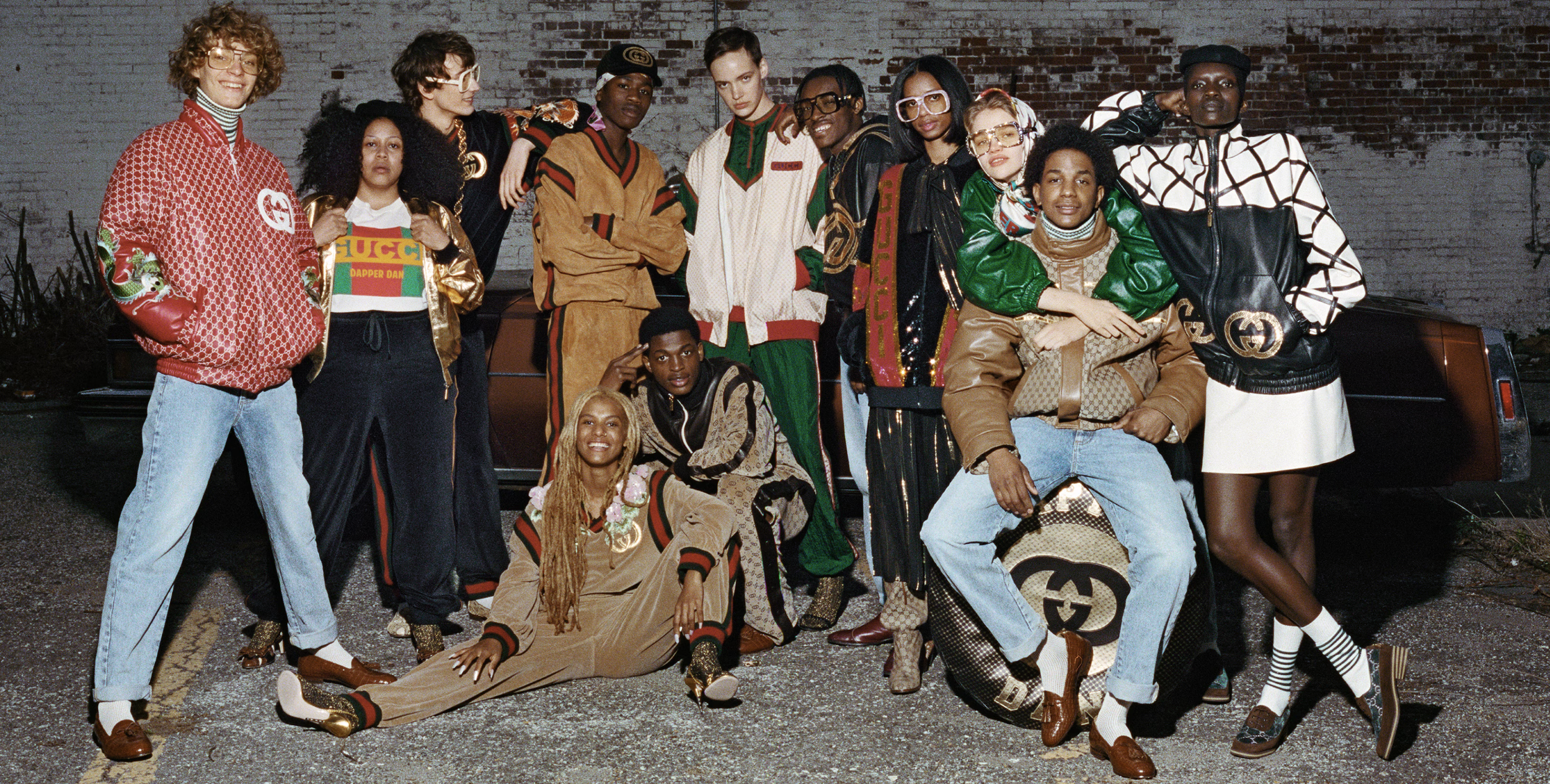
@Ari Marcopoulos for Gucci x Dapper Dan
In 1988, Gucci sent a cease-and-desist to a tailor in Harlem. His name was Dapper Dan, and he had been taking their logos, along with those of Louis Vuitton, Fendi, and MCM, and reworking them into custom pieces for rappers, athletes, and figures whose cultural presence the houses had not yet learned to see as commercial opportunity. The houses did not sell to them. The geography was wrong, the clientele too new, the cultural associations too uncomfortable.
Gucci shut him down. And then, thirty years later, they hired him.
That arc, from lawsuit to collaboration, is the story of how hip-hop rewrote the rules of luxury. Not just the dress code. The soundtrack, the language, the demographic assumptions, and ultimately the values of an industry that spent a century carefully controlling who it dressed and who it spoke to.
The first wave: aspiration as subversion
When Run-DMC wore Adidas without laces on stage and then recorded My Adidas in 1986, they were not doing a brand deal. They were doing something stranger and more powerful: taking a product that middle-class America associated with athletic aspiration and relocating it in the aesthetic and cultural vocabulary of Black New York. Adidas took notice and signed what is widely credited as the first major brand-artist deal in hip-hop. The executives who approved it were betting on aspiration flowing upward. They were right.
The luxury houses watched from a distance. The specific codes of European luxury, the logos, the monograms, the hardware, were deeply appealing to hip-hop's first commercial generation, for reasons that were partly ironic and partly utterly sincere. Wearing a Louis Vuitton monogram in Queensbridge in 1992 was a statement about desire, about refusal, about the assertion of material ambition in a context designed to suppress it.
Hip-hop did not just wear luxury. It co-authored what luxury means for an entire generation.
The second wave: from consumer to author
By the time Jay-Z was referencing Cristal and Bijan on Hard Knock Life, hip-hop had moved from referencing luxury to defining it. The brands being name-checked were not just status symbols for the artists, they were becoming status symbols for their audiences because of the artists. The aspiration was flowing in both directions.
This created a tension that the luxury world handled poorly for years. Several brands expressed discomfort with their hip-hop associations. When Cristal's managing director suggested the champagne label was uncomfortable with its adoption by the rap world, Jay-Z called for a boycott and switched to Armand de Brignac, which he later acquired. The lesson was clear: you cannot treat hip-hop's commercial power as an asset while treating its culture as a liability.
Kanye West understood this before almost anyone else in either industry. His collaboration with Louis Vuitton in 2009, a sneaker collection that sold out immediately and now trades at significant premiums, established the template for what a serious luxury-hip-hop collaboration could look like: not a logo on a tracksuit, but genuine co-authorship of a product.
The third wave: full circle
When Pharrell Williams was announced as Creative Director of Louis Vuitton Menswear in 2023, some described it as a surprising appointment. It was in fact the logical endpoint of thirty years of influence. Hip-hop had not simply dressed itself in luxury. It had spent three decades building the cultural authority to run it.
Pharrell's first show, staged on the Pont Neuf in June 2023, opened with a crowd that reflected a different idea of who luxury speaks to. The music was deliberate: Pharrell produced the soundtrack himself, drawing on the sonic vocabulary of Virginia Beach, of his production history, of Black American music across its full complexity. The clothes were Louis Vuitton. The sound was something entirely new.
What luxury sounds like now
The sonic consequence of this cultural shift is still unfolding. Luxury brands that once scored their campaigns exclusively with classical music or French chanson now move fluidly between genres. The question is no longer whether hip-hop belongs in luxury, that argument was settled a decade ago. The question is whether brands understand the culture well enough to operate within it with any authenticity.
The ones that do tend to have people inside who actually live in that culture. The ones that do not tend to produce collaborations that feel extractive: taking the aesthetic signals without the cultural knowledge, the logo placement without the relationship. Dapper Dan is still in Harlem. He has a studio above a boutique that Gucci helps fund. The cease-and-desist is framed on the wall.
