
What a fashion show sounds like before anyone sees the design
@ Ben Iwara
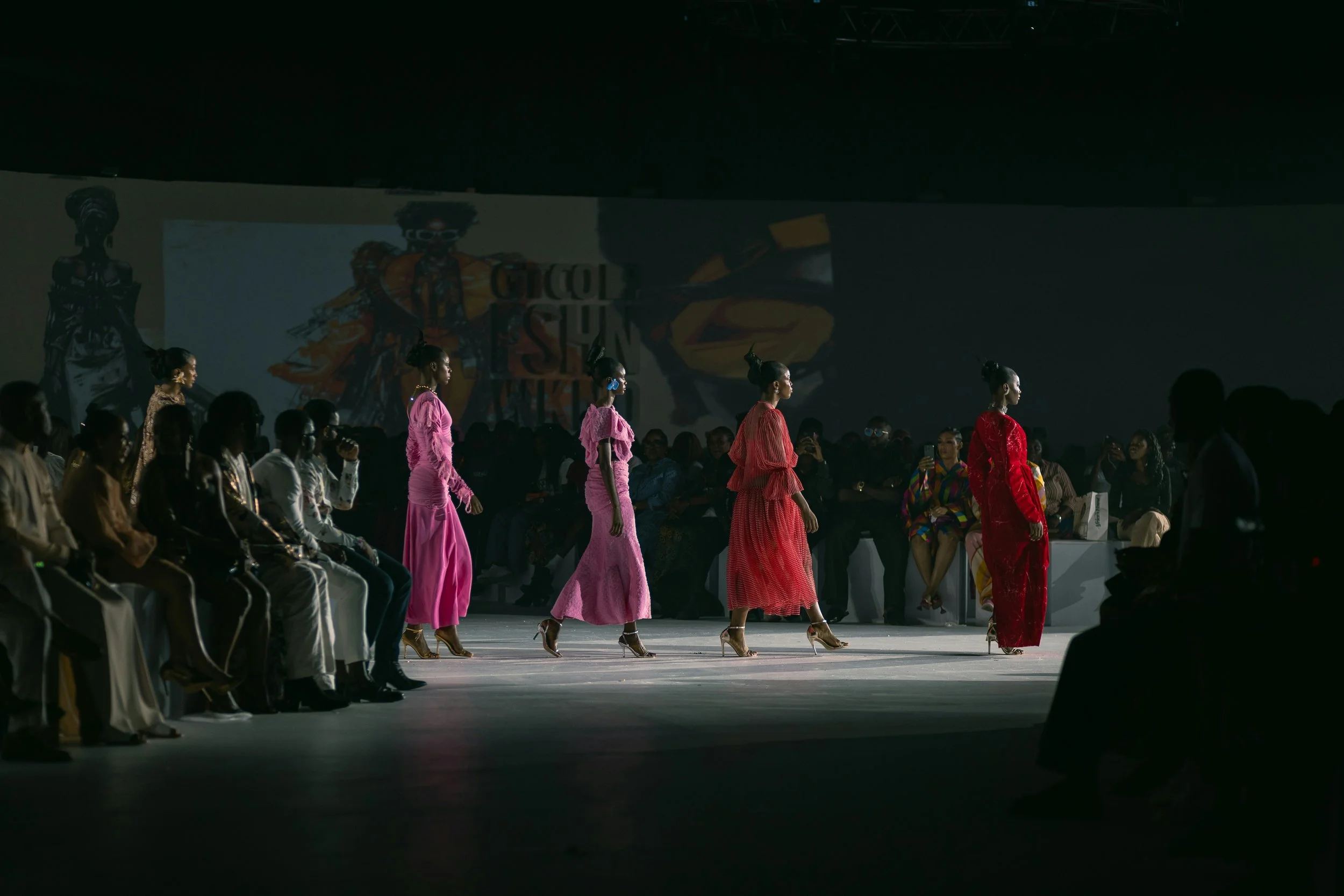
There is a moment, about thirty seconds before the first model appears, when you understand exactly what kind of collection you are about to see. The lights have not changed. The set is still. But the music has started, and that is enough.
Fashion is taught as a visual discipline. Fabric, silhouette, construction, colour, these are the terms we reach for when we try to describe what a designer does. But anyone who has sat in a runway show knows that the first impression is never visual. It is sonic. The soundtrack lands before the clothes do, and it shapes everything that follows.
This is not accidental. The music directors and sound designers behind major shows spend weeks, sometimes months, working on a set that will last twelve minutes and will never be heard by most of the people who eventually see the collection. And yet that sonic environment is doing some of the most important brand-building work in the entire fashion calendar.
Jacquemus: the sound of somewhere
Simon Porte Jacquemus is one of the most deliberate musical curators in fashion. His shows do not use music the way most brands do, as atmosphere, as energy, as something to keep the room from going quiet. He uses it to locate you. Geographically, emotionally, temporally.
The Bambino show, set in a Provencal lavender field, opened with a French chanson so warm and unhurried it felt like someone had set your childhood on a turntable. Recent shows in Paris have leaned into Mediterranean folk and Romani jazz, not as pastiche, but as genuine cultural rootedness. You knew before the first look walked out that this was going to be a collection about pleasure and belonging, not disruption or provocation.
The soundtrack lands before the clothes do, and shapes everything that follows.
What Jacquemus understands is that music does not describe the collection. It creates the emotional conditions in which the collection will be received. The same clothes soundtracked with ambient techno would read as ironic and detached. The chanson makes them sincere. Same garments, different meaning entirely.
Rick Owens: music as ideology
If Jacquemus uses music to locate, Rick Owens uses it to command. His shows have featured everything from droning industrial noise to operatic sopranos to gospel choirs, sometimes within the same twelve minutes. The effect is never decorative. It is structural.
The gospel choir show, now legendary in fashion circles, did not merely accompany the clothes. It transformed the room into something closer to a ceremony. The models moved differently. The audience sat differently. When you watch the footage back, you realize the music is not supporting the fashion; the fashion is completing the music. Owens had essentially staged a ritual and dressed it in garments.
His sound choices are also deeply ideological. Industrial noise and avant-garde composition are genre choices that signal a refusal of the commercial and the agreeable. The music tells you this is not for everyone, before a single piece of clothing has made that argument.
Loewe: the eclectic as worldview
Jonathan Anderson's Loewe operates on a different principle. Where Owens is monolithic and Jacquemus is rooted, Anderson is promiscuous, in the best possible sense. His shows move between classical guitar, minimal electronic, obscure folk recordings, and contemporary pop with an ease that would read as incoherent if it were not so clearly intentional.
What unifies the Loewe soundtrack is curiosity. There is always a feeling that Anderson has gone somewhere unexpected to find this music, that it arrived at the show via genuine discovery rather than curation software. It signals intelligence and range without showiness. The music, like the clothes, seems to ask: did you know about this? No? Well, now you do.
The invisible creative
Behind every show soundtrack is a set of decisions that rarely gets attributed. Who chose this track? Who sequenced these songs? Who decided the opening should be unnerving, the middle triumphant, the finale elegiac? In most cases we do not know, because fashion still does not talk about its sonic creatives the way it talks about its casting directors or set designers. That is beginning to change, slowly, as brands invest more seriously in sonic identity as a discipline.
Pay attention to the soundtrack before the first look walks out. That is where the brand tells you what it actually believes.
