
Why luxury brands are quietly building their own sound libraries
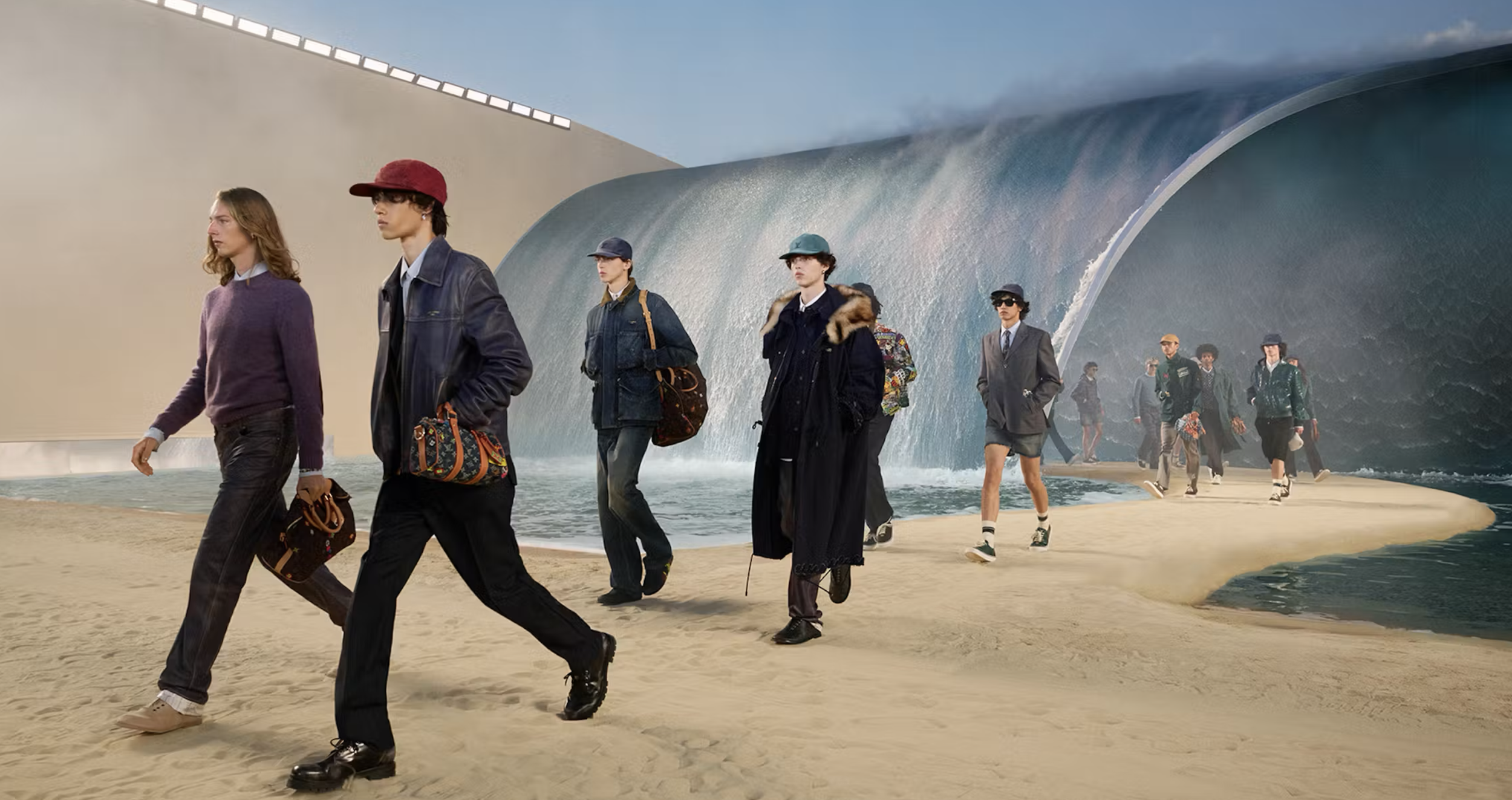
@ Louis Vuitton SS27
Nobody announces it. There are no press releases, no Creative Directors quoted in trade publications talking about their new audio strategy. But over the past three years, something significant has been happening in the back rooms of the world's most recognized luxury houses: they are building sound libraries. Not playlists. Not mood boards. Proprietary sonic assets, compositions, textures, tones, that belong entirely to them.
It is the audio equivalent of a trademark. And it is becoming one of the most important infrastructure decisions a luxury brand can make.
The licensing problem
For decades, luxury brands sourced music the way everyone else did: license a track, run it in the campaign, let it expire, repeat. The system worked well enough when brand touchpoints were limited, a television spot here, a store playlist there. But the digital era has multiplied the moments where a brand needs sound.
Apps, websites, social content, podcast sponsorships, branded playlists, retail environments, events, short-form video, every one of these touchpoints requires a sonic decision. And every licensed track comes with restrictions, expiry dates, territorial limitations, and the permanent risk of that song becoming associated with something the brand would prefer to avoid. When a track you have built a campaign around ends up in a viral moment you did not choose, you lose control of the association. For a luxury brand, that is not an acceptable risk.
Ownership changes everything
The move toward proprietary sound libraries is fundamentally about control. When you own your sonic assets, you can use them anywhere, at any time, in any market, without negotiation. You can evolve them slowly over years without worrying about a license expiring. You can train your team to apply them consistently across regions and formats.
A sonic brand book is as important as a visual brand book. The brands that do not have one yet will.
Several major houses have been quietly building exactly this. Burberry has been developing a composed sound palette that travels across its digital retail experience and runway presentations. Chanel has invested in original composition work that runs underneath its film content, not as identifiable music, but as atmospheric architecture. Dior has been experimenting with sonic signatures tied specifically to major product launches.
None of them talk about it much. Competitive advantage is part of the reason. But so is the fact that the luxury world is still learning how to speak about sound as strategy rather than as taste.
What a sound library actually contains
The misconception is that a brand sound library is simply a set of approved songs. In practice, it is considerably more layered. At its core, there is typically a sonic logo or signature, a short, distinctive sequence of tones that can travel across touchpoints. Beneath that sit composed environments: longer-form pieces designed for specific contexts such as retail, digital, event, and film. Below those are raw sonic textures, the tonal DNA of the brand, from which new material can be generated without drifting from the established identity.
Think of it the way you would think of a typeface system. The logo sits at the top. Below it are headline fonts, body fonts, caption fonts. Below those are the typographic rules. Each level can be used independently, but all share the same underlying DNA. A sound library works the same way.
What comes next
The brands building sound libraries now are positioning themselves for a shift that has not fully arrived yet but is clearly coming: the rise of ambient digital environments where sound is always present. Smart retail, augmented reality, spatial computing, all of these require brands to have a sonic point of view that goes well beyond a playlist. The brands that have done the foundational work will navigate that shift with coherence. The ones that have not will find themselves licensing tracks at scale in environments where licensing no longer makes sense.
The quiet work happening in the back rooms of luxury houses right now is infrastructure. Unglamorous, invisible, and entirely essential.
