
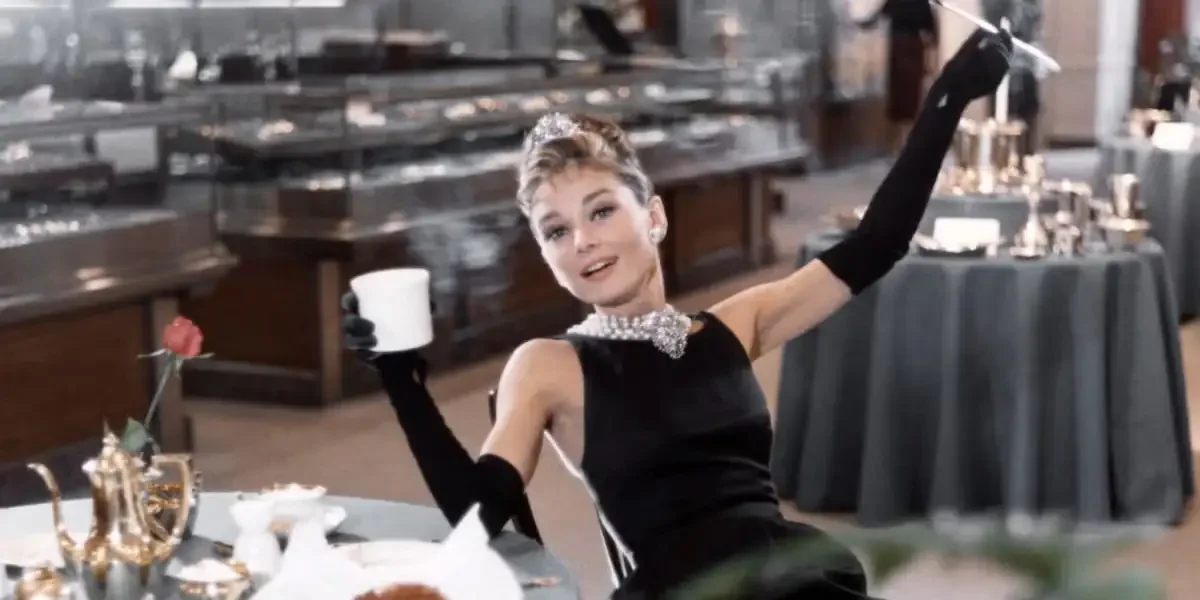
©Breakfast at Tiffany's, Paramount Pictures
Few songs belong to a brand as completely as Moon River belongs to Tiffany & Co., and the house never commissioned it. Henry Mancini and Johnny Mercer wrote it for Audrey Hepburn to sing in Breakfast at Tiffany's, released by Paramount in 1961. A film named after the store did the rest.
Sixty years later, the house did something most brands would hesitate to do with a piece of inherited heritage. It gave the song a new voice.
About Love
In September 2021, Tiffany, by then part of LVMH, released the film for its About Love campaign. Directed by Emmanuel Adjei, it shows Beyoncé singing a reimagined Moon River, filmed by Jay-Z on a Super 8 camera. The melody stayed. The voice, the arrangement and the setting changed.
That is a precise use of a rare asset. Tiffany did not retire the song to a museum, and it did not replay the 1961 original. It kept what the public already linked to the house and renewed everything around it, so the film spoke to two audiences at once: those who knew Hepburn's version and those meeting the song for the first time.
Heritage cannot be manufactured after the fact. It can be commissioned in advance.
For houses without a Moon River
The example has a limit. Most houses do not have a Moon River. That kind of heritage comes from one film at one moment, and nobody can create it retroactively. The alternative is to commission it.
A commissioned piece can do the job a heritage song does if it is written with the same discipline. It is built around the house's own story, not someone else's. It carries a melody or motif that can be recognised on its own, the quality we examined in Intel's five notes and Netflix's two. It is written to be arranged differently for a film, a boutique, a flagship opening or a private client evening. And it belongs to the house, so it can be reinterpreted, by different voices, for decades, without a negotiation each time.
Built to be handed down
For watch and jewellery houses the idea comes naturally. Their objects are designed to pass between generations, and some already carry sound inside them, as we wrote about the sonic identity of watches. The music that accompanies a house can be designed the same way.
The measure of success is the one Tiffany enjoys today. Can someone else sing it, sixty years from now, and still be speaking about the house?
This is the heritage work Maison Sonor builds for jewellery, watch and fashion houses: original music written for the house, with usage rights defined from the start. Start the conversation.
