
©Burberry
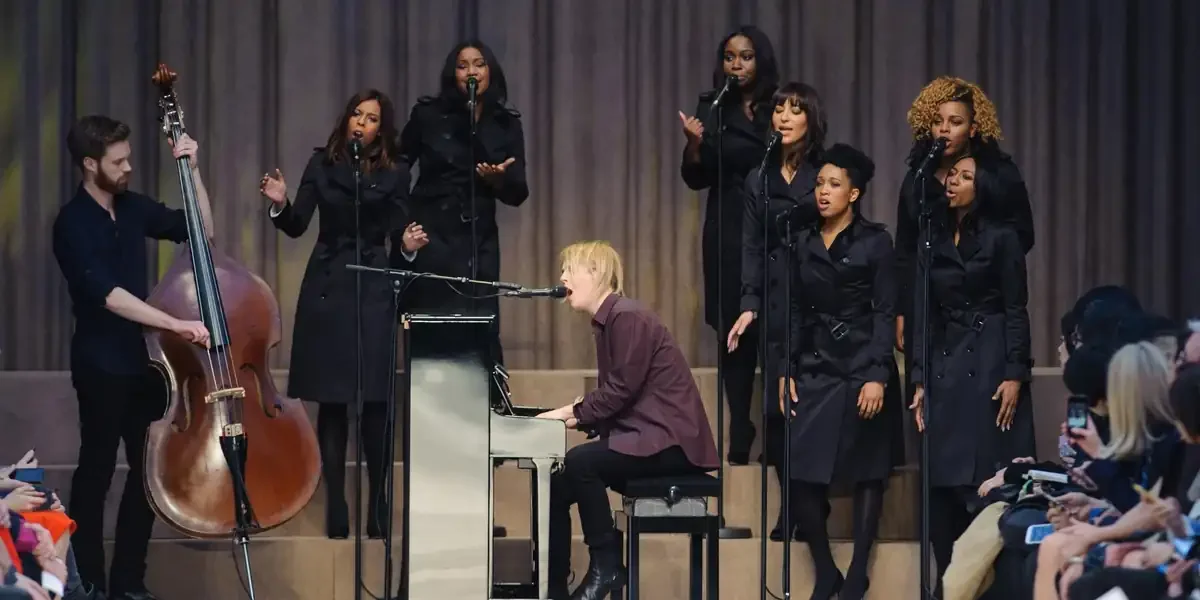
In February 2013, the guests at Burberry's Autumn/Winter womenswear show in London watched the collection to a live performance. Tom Odell sat at an upright piano and sang "Hold Me", backed by a choir in black trench coats, loudly enough, according to SHOWstudio's report, that the whole tent seemed to shake. It looked spontaneous. It was the visible end of a programme the house had been running for almost three years.
A programme, not a campaign
Burberry Acoustic was announced in June 2010, around the Spring/Summer 2011 menswear show. The idea was simple: film emerging British musicians performing acoustic sets, and use them across the brand. Christopher Bailey, then Chief Creative Officer, chose every artist himself. The first track released under the banner was "Alleyway" by the London band Life in Film.
From there the programme spread to pre-show films, store events and a London Fashion Week album that set new acts beside established names. By 2015 it had roughly 100 filmed performances behind it, and Burberry launched a curated channel on Apple Music, reported at the time as the first by a luxury fashion house.
A famous name borrows attention. A consistent roster builds a point of view.
Selection is the asset
What made it work was not scale. It was selection. The artists were not hired to lend credibility to a coat. They were chosen because they belonged to the story the house already told about itself: British, young, a little raw. One person with taste decided who was in and who was out, and kept deciding for years.
That is the test of any partnership. Does the artist's world genuinely overlap with the brand's, or is it only adjacent? Rap's long road into luxury shows the same thing from the other side: collaborations land when someone inside the house understands the culture, and feel extractive when nobody does.
Three lessons for other houses
Curation is the work. The value of Burberry Acoustic was never a single performance. It was a filter applied consistently.
Design for several formats. The same artists worked in a pre-show film, a store, a record, a streaming channel and, eventually, on the runway. Partnerships travel when they are planned for several uses from the start.
Someone has to own it. Contracts, schedules, rights and relationships need people on the brand side who understand both the music and the house. That is the unglamorous half of music supervision, and the half that decides whether a programme lasts.
A note on tense: Burberry Acoustic belongs to a particular period of the house's history, and this article describes what it did, not what it does today.
At Maison Sonor, music supervision and partnerships follow the same principle: find artists whose world truly overlaps with a brand's, and build something designed to outlast the launch. Let's talk about yours.
