
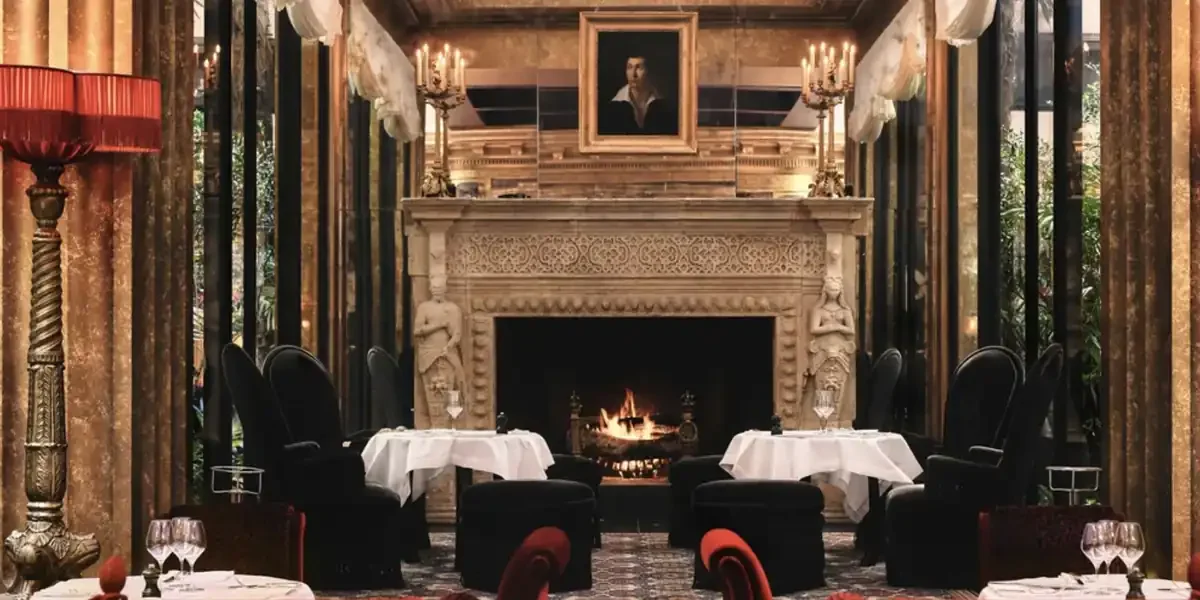
©Hôtel Costes
A hotel lobby is rarely remembered for what it plays. Hôtel Costes, on rue Saint-Honoré, is the exception, and the reason says more about music direction than about hospitality.
According to published accounts of Stéphane Pompougnac's career, co-owner Jean-Louis Costes hired him as the hotel's resident DJ in 1997. In 1999 the hotel's sound left the building: the first Hôtel Costes compilation was released, and the series ran to fifteen volumes over the following decade. The first three mixes together sold close to half a million copies, a remarkable figure for what was, in effect, a hotel's background music.
The sequence, not the sales
The numbers are not the lesson. The sequence is. The hotel decided what it should sound like. It gave one person responsibility for that decision. And it kept him in place long enough for the sound to become recognisable away from the rooms that produced it. People who had never set foot in the hotel could still own a piece of its atmosphere.
A playlist gets refreshed. A direction gets kept.
Compare that with how most hospitality brands treat music. A playlist is built for the opening, updated when someone remembers, and nobody is accountable for it. When it changes, nothing in the brand changes with it, because nothing in the brand was ever attached to it.
Direction first, curation second
Music direction is the opposite discipline. It starts by asking what a place stands for and turns the answer into principles: what belongs, what never does, how the sound moves from breakfast to midnight. Curation applies those principles day after day. Costes shows what happens when the two stay in the same hands. The hotel did not pick tracks to fit a room. It built a room that could be heard.
The logic is the one we described in what a fashion show sounds like before anyone sees the design: the first seconds of sound tell an audience what kind of house it is dealing with. A lobby does that job every day, for every guest.
What a hotel can own
For luxury hospitality, the lesson is practical. A lobby, a restaurant and a spa each have a different job, and one undifferentiated playlist serves none of them well. A house can curate each space separately, and it can own part of what it plays. Original composition, written for a specific room or opening, gives a venue something that cannot be heard anywhere else and cannot vanish when a licence lapses, a risk we set out in the hidden cost of the needle-drop. It is the difference between a sound a hotel rents and a sound it keeps.
None of this requires a resident DJ or a record deal. It requires someone to decide, in writing, what the place should sound like, and to stay accountable for it. Costes did that in the late nineties, and the name still travels.
At Maison Sonor, hospitality work starts in that order: direction, then curation, then composition where a venue needs a sound of its own. Start a conversation with us.
