
Fragrance films and the return of the commissioned score
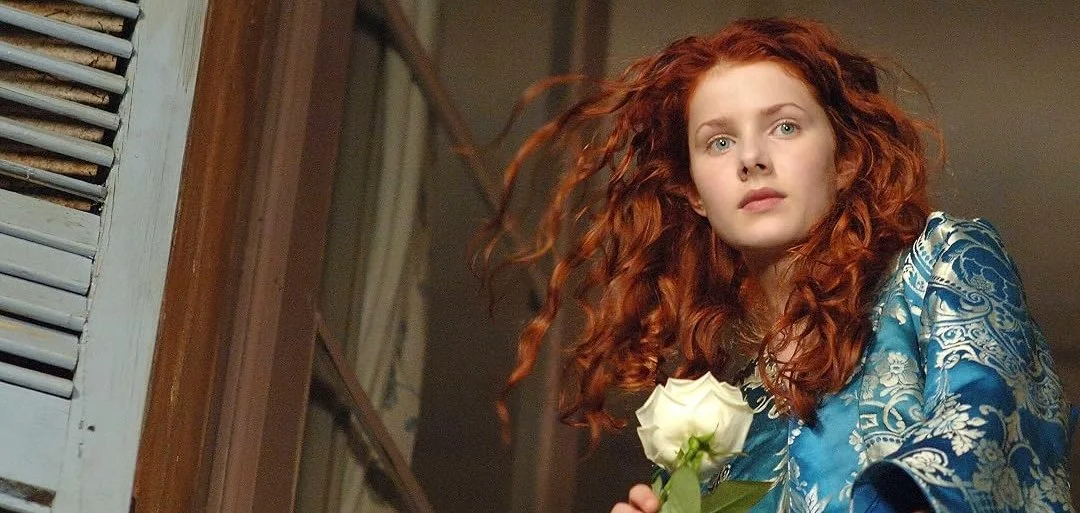
©Perfume: The Story of a Murderer
A fragrance has no sound of its own. That silence is precisely why perfume advertising has, for decades, leaned on music harder than almost any other category in luxury: the score is doing work the product physically cannot do for itself, translating an invisible, unphotographable sensation into something an audience can actually experience through a screen.
The clearest proof of what a genuinely bespoke composition can achieve for a scent is not even an advertising case study, it is a film. When director Tom Tykwer adapted Patrick Süskind's novel into Perfume: The Story of a Murderer, he wrote the score himself alongside longtime collaborators Johnny Klimek and Reinhold Heil, and had the Berlin Philharmonic, conducted by Sir Simon Rattle, record a substantial portion of it before shooting even finished. Tykwer played the recorded music on set so the actors could inhabit the sensory world of the story while performing it, rather than have a score bolted on afterward in the edit room, an inversion of the usual process that most productions never attempt. The result is widely regarded as inseparable from the film's atmosphere of obsession, scent, and pursuit, precisely because the music was not chosen to fit the story, it was built to construct the sensory register the story lives inside.
A recent, more commercial version of the same idea
Independent perfume houses have started reaching for exactly the same logic at campaign scale rather than feature-film scale, and the economics of it have become far more accessible than a full orchestral recording. AMAFFI Perfume House's short film for its Savanna fragrance was built around an original composition by Grammy-nominated trumpeter and composer Ibrahim Maalouf, written specifically for that scent's launch rather than licensed from an existing catalogue. Maalouf described the collaboration as a departure from his usual work, composed to translate the fragrance's floral, radiant character directly into a musical mood, shot against the backdrop of Saudi Arabia to match the desert imagery the brand wanted to evoke. The film's entire sensory pitch, asking an audience to feel they have smelled something they have only heard, only works because the music was written for that exact purpose and nothing else, with no prior association to strip away or reinterpret.
What a licensed track cannot do
A licensed track arrives with baggage: a prior context, a prior emotional association, a prior use in someone else's campaign or someone else's film. Even a perfectly chosen existing song is doing double duty, carrying its own history into a brief it was never written for. A commissioned score carries none of that weight. It exists for one purpose, tied to one scent, one launch, one specific sensory translation, which is exactly why it can be pushed further into abstraction, into a mood that has no reference point outside the fragrance itself.
A licensed track was written for someone else's story. A commissioned score is written for the story you are actually telling.
Why this matters more for scent than for almost any other product
Fragrance marketing has always tried to translate an invisible sensation into something perceptible through a screen. Sound is one of the only tools capable of that translation, because unlike image, it unfolds in time the way a scent's opening, heart, and base notes do. A generic licensed track can set a mood competently enough. Only a piece built specifically around a fragrance's character, the way Tykwer's orchestra was built around Grenouille's obsession or Maalouf's trumpet around Savanna's jasmine and neroli, can make an audience feel they have experienced something that was never actually visible or audible to begin with, and that is a category of marketing problem custom composition is simply better equipped to solve than any catalogue search ever will be.
